
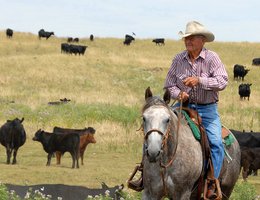
Cattle are so much a part of Nebraska life today that it may seem strange to think of a time when there were none in our area.
We think "west" when we think about beef in America, but its story is really about going north. Cattle are not native to the American continents. The Spanish brought them to the Americas in the 16th Century.
In Mexico, strays from Spanish herds, especially in what is now southern Texas, thrived and grew into large herds of wild animals that took care of themselves. Over almost 350 years, these animals evolved into the Texas Longhorns.
The Longhorns had a high reproductive rate, were resistant to disease, and could fight off predators. Their numbers grew into the millions by the time Texas joined the Union in 1845. These animals became the foundation of the beef empires in the American West and dramatically changed what Americans ate.
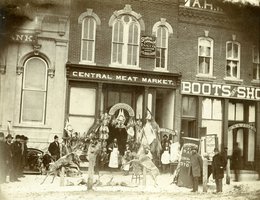
Before the Civil War, when Americans ate meat, it was mostly poultry, pork, and game. The problem was spoilage.Poultry (like chickens and ducks) and small game (like rabbits and squirrels) could be eaten the same day they were killed. Pork and large game (like deer) could be dried, smoked, or salted, and thus preserved. But Americans never really liked dried beef, and fresh beef spoils quickly.That changed after the Civil War. Demand for beef exploded, both in America and in Europe. Railroads moved west connecting the huge herds of cattle with the packing plants, and refrigeration allowed beef to be processed year round.When Nebraska became a state in 1867, it quickly led in beef production. Our western regions, particularly the Sandhills, were thick with healthy grasses for grazing, plenty of water, and rich farmlands that produced abundant corn for feeding.
An exciting new era in the history of Nebraska had begun.
Because of the Civil War, two things happened that created the American beef industry:
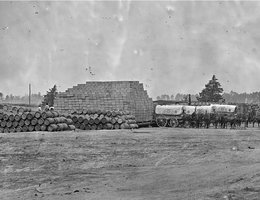
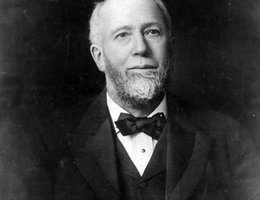
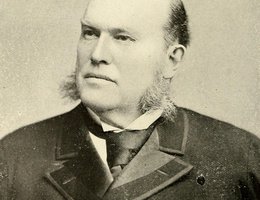
The Union had a huge army that needed food. To meet this demand, innovative butchers in Chicago with names like Gustavus Swift and P. D. Armour acquired large buildings, hired every butcher they could find, and bought every head of livestock in the region that was available to them.
These two meat-processing businessmen created what they called "disassembly plants." A steer would enter the plant, be slaughtered, processed, and emerge at the end canned or packed in barrels. This meat was then sold to the government to feed the army.
In Texas, a southern state, many of the men who worked the ranches went off to war. And by 1862, the Union’s naval embargo and hold on the Mississippi River cut Texas off from the traditional markets for its cattle: the other southern states and Great Britain.
When the war ended, Texans, as with other Southern states, returned to find their state’s economy in ruins. But during the War, the cattle on the Texas plains continued to breed and multiply. So at the end of the Civil War, there were cattle in the south and a demand for them in the north.
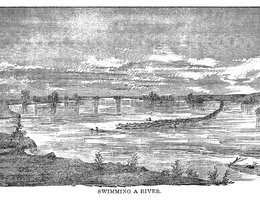
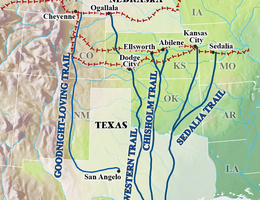
Because there were so many cattle in Texas and so few people, the cattle were worthless. But those same cattle were worth a lot in the north, where Americans’ taste for beef had grown. The four-dollar steer in Texas was worth 30 to 40 dollars in the north. The problem was getting the worthless cattle to the place where they had value.
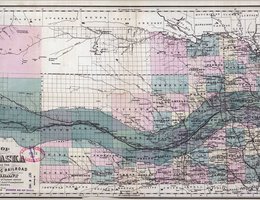
The creation of the Union Pacific and Southern Pacific Railroads solved that problem. Texans could drive their cattle north to meet the railhead where they could be shipped to Chicago and the eager demand of the American people.
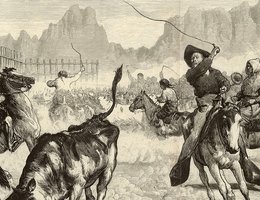
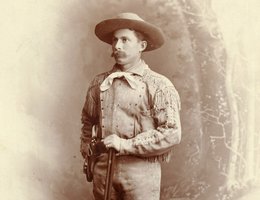
Trail drives were hard work and required tough men to work them. James H. Cook trailed Texas cattle in the 1870s and later established a ranch at Agate Springs, Nebraska.
"Slight things threw the cattle into confusion and then a hurly burly scene followed. A horse wearing his saddle lies down to roll; when he rises the stirrups fall, and striking him in the sides give him fright; he springs to the length of his tether, snaps it and dashes into the herd. Up jump the steers in alarm; every one that comes to his feet causes a dozen others to bound to theirs; and now, as if by electric impulse — quick as lightning — the whole herd shaken with terror, plunges in one direction. . . .
"The alarm has brought every man to his feet. Stopping for nothing, caring for nothing but the one supreme object of overtaking, following, and at the first practicable moment turning and controlling the stampede, those quickest to think and act, seizing their saddled horses . . . The flight is so swift that some of the riders lose the herd entirely. Others overtake them; and then these begin that slow, soothing, reassuring wordless song with its long sustained notes peculiar in quality of sound, known to every cowboy on the Texas trail . . ."
—James H. Cook as told to Eli S. Ricker, May 23, 1907
By 1868, Texas herds were reaching railheads in Sidney, Ogallala, and North Platte. Soon ranches sprang up, and the Nebraska cattle empire was born.
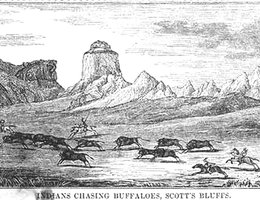
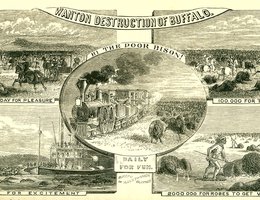
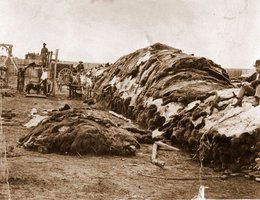
The change in the Nebraska landscape was dramatic. In just a few short years, cattle replaced the American bison as the leading, cloven-hoofed, grass-eating mammal on the Great Plains. In 1850, millions of bison ranged the grasslands and were the main natural resource for the region’s American Indians.
In 1868, the steel rails of the transcontinental railroad created a barrier that bison did not like to cross. That divided the great herd into northern and southern herds.
When the great trail drives began, bison interacted with the cattle being driven from Texas.
"Buffaloes travel in a straight line. When they were moving and encountered a herd of Texas cattle they invariably bored right through the herd, turning neither to right nor left. It was just the same if but one or a dozen buffaloes were on the move — they walked straight through." –James H. Cook as told to Eli S. Ricker, May 23, 1907
The cattle infected the bison with new diseases: the dangerous brucellosis as well as Texas tick fever, which dramatically weakened the bison herds.
Then in 1870, a process was developed that so bison hides could be commercially tanned into soft, flexible leather. This happened at the same time there was a high demand for leather to make the belts that powered machines in the Industrial Revolution. There were huge markets in England, France, and Germany. Bison hunters poured onto the Great Plains. By 1880, the combination of disease, environmental stress, and hunting left the bison near extinction.
The destruction of the bison had two important consequences:
It left the vast grasslands open to the herds of cattle moving north from Texas. Now cattle ranches appeared in the north.
More importantly, though, it robbed the Plains Tribes of the one resource that allowed them to move across the plains.
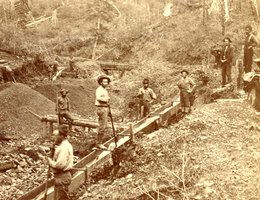
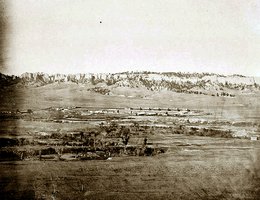
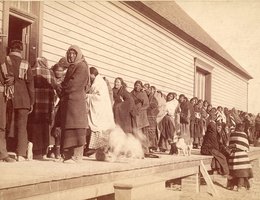
With the path wide open for cattle’s entry into Nebraska, three new markets for beef increased demand beyond the needs created by the Civil War.
In 1874, Lieutenant Colonel George Armstrong Custer of the U.S. Cavalry emerged from an expedition into the Black Hills and announced that he had found gold there. Prospectors flooded into the area.
In 1875, there were fewer than a thousand people illegally mining for gold in the Black Hills.
In 1876, there were over ten thousand.
Towns sprang up around the swarm of miners with businessmen eager to help them spend their new-found wealth. These trespassers onto Native American land disrupted the fragile peace established between the United States government and the Arapaho, Cheyenne, and Lakota in the Treaty of 1868.
These tribes defended their land from the wave of invaders, resulting in a military response by the U.S. Soon a permanent military post, Fort Robinson, stood in Nebraska, just south of the Great Sioux Reservation.
Military clashes in 1876 and 1877, along with the rapid decline of bison (Native Americans’ main food source), forced the tribes onto new, smaller reservations. This ended the free-ranging life that they had known, putting them under the control of the United States government.
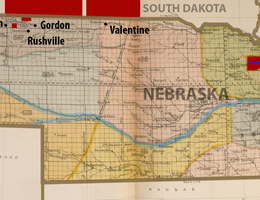
With no natural meat resource left, the U.S. government had to supply cattle to the people on the reservations. Cow towns like Valentine, Rushville, Gordon, and Chadron burst onto the scene to meet that demand.
Now, nearly overnight, there were new demands for beef to feed hungry miners, the soldiers, and the Indians on the reservations.
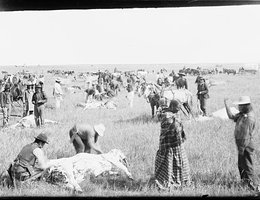
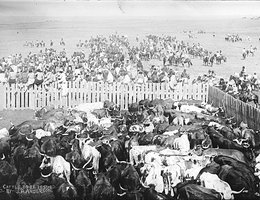
On the reservations, sugar, flour, coffee, bacon, dried beans, and other staples (often referred to as "domestic rations") were given to Native Americans. Sometimes, the government would provide live cattle at events called "beef issues". Herds of around 100 to 150 head of cattle were driven to the reservation agency where families would gather for the distribution.
Cattle would be turned loose on the prairie, and then chased by mounted hunters, much like the days of the bison hunts. When an animal had been killed, families would dress out the animals where they fell. The Indians would load the meat onto wagons where it was then dried for storage.
Chief Red Cloud traveled to Washington, D.C. to talk Congress into creating the Indian Agency later named for him. The Omaha Herald described one of these events on Sunday, September 19, 1875:
"About 3,000 mounted Indians surrounded the corral where the cattle were confined; as the names of the Indians were called out, the gate of the corral was swung open and the requisite number of beef were let loose, and then commenced a most savagely exciting scene that pen or picture could depict."
and another from the
In later years, the “hunts” ended. With the large number of people, spooked animals, and shooting, the possibility of injury was great. Animals were simply killed in their corrals, and then hauled out where there was room to dress them. Beef issues continued into the 20th century.
By 1875, cattle had become a permanent part of Nebraska’s landscape. Some wanted them here, but some clearly did not.

