
Nebraska has had only two official state names:
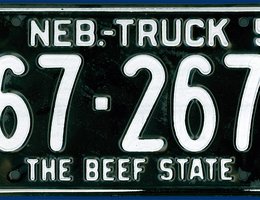
However, beef had become so important to Nebraska’s economy by the 1950s that from 1956 through 1965, the Nebraska license plate carried the motto,
That title was never an official state name by act of the legislature, but it carried an important place in the hearts of Nebraskans.Beef boomed Nebraska’s economy. The tax revenue it generated helped support important, long sought-after building projects and created new institutions, such as:
In Nebraska, the prosperity of the 1950s and ‘60s that the rest of the country also felt was directly a result of our beef economy.
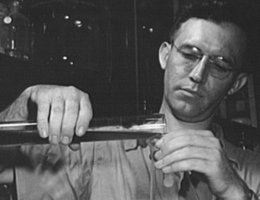
The demands of World War II led to huge advances in technology in the 1950s, even in the way Americans ate. Convenience foods became very popular with new methods to refrigerate, dry, and freeze foods.
Thousands learned how to feed large numbers of people in the mess tents of war and returned home to apply those skills in restaurants. And after a decade of depression and five years of war shortages, people were eager to return to dining outside the home.
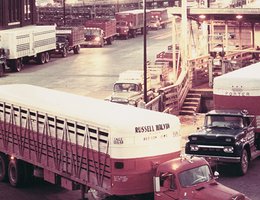
New uses were found for equipment and chemicals that were used during the war. They increased the amount of food produced and made it easier to transport it. Some chemicals became fertilizers, herbicides (weed killers), and insecticides (insect killers). The antibiotics that were developed during the war were used in veterinary medicine for animals. The powerful diesel engines developed for military vehicles led to larger and larger trucks and tractors. The combination of chemicals and more powerful equipment allowed farmers to work more cornfields, which then led to larger and larger beef feeding operations. Diesel powered semi-trailer trucks allowed ranchers and feeders to ship their cattle on highways. With the completion of the interstate highway system and the addition of refrigeration, trucks replaced trains for the delivery of frozen beef.
All of these changes came at a price. The use of chemical fertilizers, herbicides, and pesticides and the growth of large feeding operations created serious environmental problems. Concerns grew that family farms and ranches were going to be pushed out of business by big corporations.
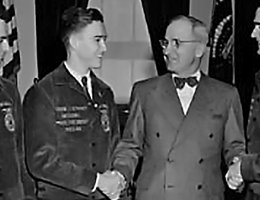
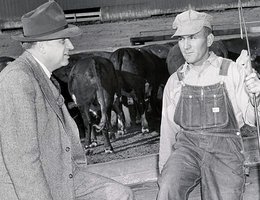
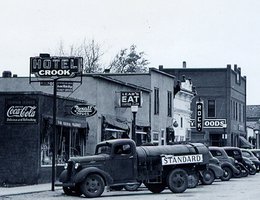
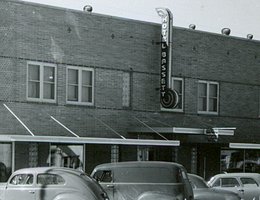
When World War II ended, President Harry Truman and his administration worked to keep government control over the post-war economy. This included maintaining price controls on beef. When the Office of Price Administration was finally dismantled in 1946, prices exploded. Money for beef started to flow freely in Nebraska’s economic pipeline.
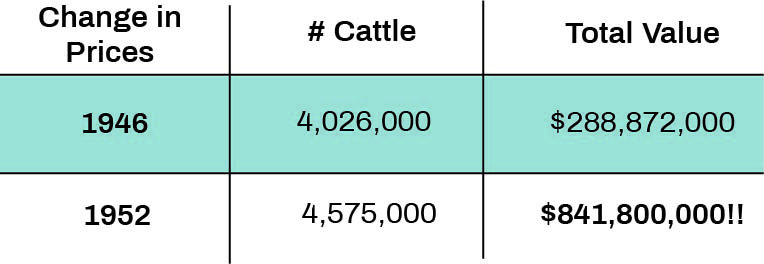
According to the book "History of Nebraska," the average value of Nebraska cattle, per head, in 1946 was 72 dollars. After that, the price jumped almost every year until it reached $184 per head in 1952, a price hike of over two and a half times as much.
To see the impact of those numbers on the state, we need to look at the total number of cattle produced and their total value. According to the Nebraska Blue Book, in 1946, Nebraska produced about 4 million head of cattle, and in 1952, it produced just a little over 500 thousand more. But the value of those cattle rose from just under 300 million dollars in 1946 to a staggering almost 842 million dollars in 1952!
So what did that mean? Let’s look at the town of Bassett, Nebraska. Bassett is in the northern grasslands of Rock County on Highway 20. Bassett has an important local sale barn, and some of its sales became national guides for forecasting trends in beef prices. While people were in town for the sales, the town’s population would often double, and sometimes triple!
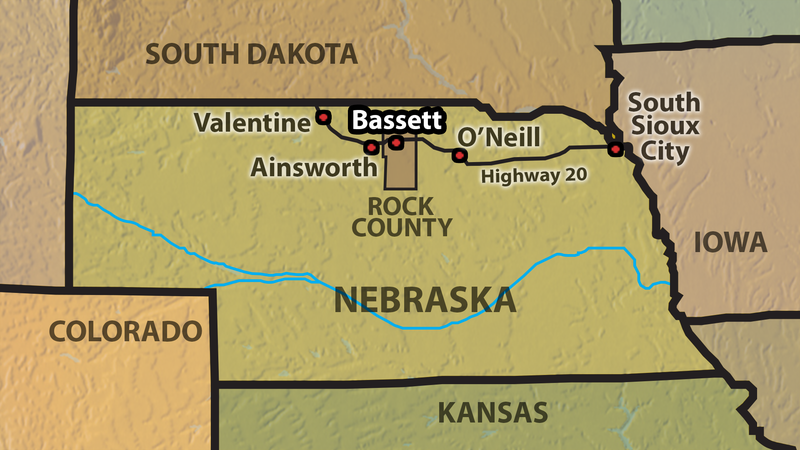
When price controls lifted, you could see the resulting prosperity all over town. In 1949, the Bassett Lodge and Range Café, now listed on the National Register of Historic Places, opened. It was a graceful structure that blended ranch and Art Moderne architectural styles and spoke of the town’s growing prosperity.
That year, and on in to 1950, Bassett saw a new lumber yard (built in the same Art Moderne style), a new implement (farm equipment) dealership, and new Ford and Chevrolet dealerships. The town also acquired a new fire truck. Within the next six years, Bassett would add a new municipal swimming pool, a new grade school, and a new country club and golf course.
Bassett was not alone. Many communities in cattle country saw their prosperity grow. And it made sense. As ranchers made more money, they bought new cars, new trucks, and new equipment. It was this post-war burst that fueled the state’s economy for nearly two decades.
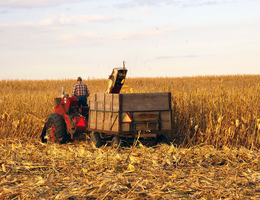
Like everything else in the beef industry, post World War II technology changed cattle feeding. Bigger tractors, fertilizers, herbicides, and advances in genetics meant that farmers could grow more corn. Mechanical corn-pickers replaced handpicked and husked corn, so fewer growers could produce more and more corn.
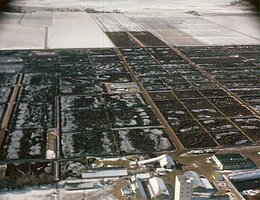
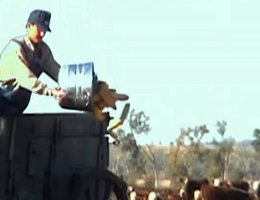
Feeding operations changed, too. Men in the back of a wagon used to shovel cracked corn into feed troughs. They were replaced with wagons and trucks that delivered exact amounts into longer feed bunks. This allowed one person to feed large numbers of cattle in a very short period of time. With these changes, the small, farm-scale feeding operations caring for hundreds of cattle dropped, and large feedlots, feeding thousands of cattle, grew.
With these changes, the small, farm-scale feeding operations caring for hundreds of cattle declined, and large feedlots, feeding thousands of cattle, grew.
Perhaps the most famous feedlot owner in Nebraska was Louis Dinklage, the child of German immigrants in northeast Nebraska. Dinklage is credited with starting the Nebraska cattle feeding industry in the 1920s, with just 3,000 head near Wisner, Nebraska. He knew the area’s qualities for feeding cattle: a dry region with more than enough food sources and water. By the late 1960s, Dinklage was considered to have the largest feedlot operation in the country. It could hold 170,000 head at one time. At the beginning of the 21st century, the Dinklage operation in Western Nebraska included feedlots at Sidney, Mitchell, Minatare, Broadwater, and Alliance, as well as one in Torrington, Wyoming.
Dinklage was famous for his open heart and even more open pocket. There were many people who told stories about getting a loan from him with just a handshake as collateral. Dinklage and his wife Abbey built a park, a ballfield, and helped to build a church, an athletic field, a school, and the Cuming County Fairgrounds in Wisner. Before his death in 1984, he set up a trust that continues to fund millions of dollars to new projects every year.
A foreman at the Dinklage Feedlot near Wisner and later a feedlot owner himself, Bill Holland thought Dinklage was a genius at cattle feeding, and crucial in making Cuming County one of the premier cattle-feeding counties in the nation. "He was the first to feed a lot of protein," Holland said. "Protein brought out more of the muscling and red meat before the cattle got too wastey with too much fat."
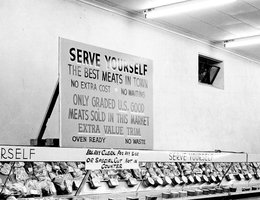
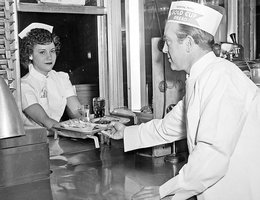
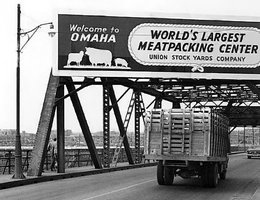
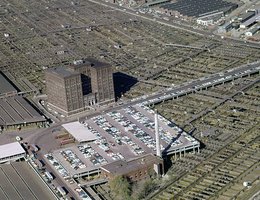
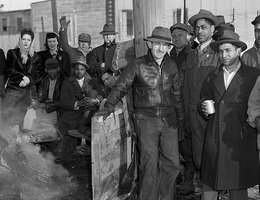
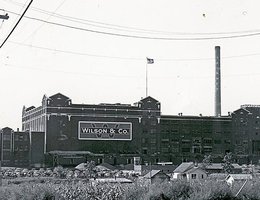
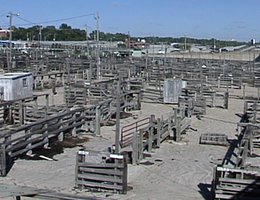
After World War II, South Omaha’s stockyards and packing houses were caught up in a postwar hunger for beef. In 1949, the average American consumed 144 pounds of meat per year, and in 1950, that number jumped to 160 pounds per year. That was nearly half a pound each day for every man, woman, and child. This was the beginning of the baby boom. There were a lot of families having babies out there!
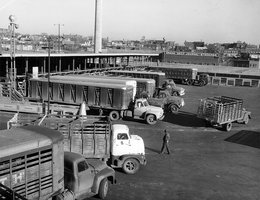
In 1956, Omaha beat out Chicago as the largest meat-producing city in the world. That year, too, for the first time, Nebraska used “Beef State" on its automobile license plates. It was also the year that the Interstate Highway System was born. More and more, cattle were brought to the yards by truck, gradually ending the industry’s dependence on rail transportation.
Prior to World War II, management forces in Omaha had successfully confined efforts to organize labor. After the War, things were quite different. In 1948, workers in Omaha joined in a national strike against the Big Four, and for the next twenty years, management and labor struggled with each other. But while they struggled, Nebraskans, and others, continued to eat beef at an ever-increasing rate.
In 1961, a new operation, Iowa Beef Packers (soon known as IBP) opened. It was forty-five miles to the east and north of Omaha, in Denison, Iowa. IBP located in Denison to be close to the production of both corn and cattle. Its founders set out to completely rethink meatpacking.
Traditional packing houses were multi-story buildings where livestock were driven up a long ramp to the top floor. They would also slaughter different species in the same building, which required different departments. Then they moved the carcass from the killing room to the chiller and into a railcar.
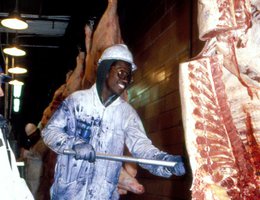
Iowa Beef Packers, as its name suggests, slaughtered only beef. Its building was all on the ground level and completely refrigerated. By refrigerating from the beginning, they were able to prevent shrinkage due to dehydration. They also created a true disassembly line where each person had one certain task in the butchering process.
This method greatly reduced the skill level that a meat processor needed, opening up jobs to a larger number of workers. In Denison, they found an eager work force, mostly people with experience in agriculture. Importantly, this labor force was not organized into a union. A non-unionized, lower-skilled workforce meant the company could pay lower wages. All of these factors combined to give IBP a strong market advantage.
They also saved money by going directly to the rancher or farmer to buy cattle. This took the stockyards out of the deals. And with large trucks, they transported their cattle straight from the feedlot to the processing plant which saved even more money.
IBP also changed the industry by developing boxed beef. Transporting carcasses to butchers required more time, space, and money. It meant that the slaughterhouse shipped a lot of waste material, and carcasses did not fit easily into the rectangular spaces of refrigerated trucks and rail cars. By cutting the carcasses into smaller pieces that fit nicely into boxes, they were able to pack much more beef into a truck. This greatly reduced the cost for transportation. Because they were doing more of the processing at their plant, the beef required less skilled labor at the meat counter.
In 1967, IBP opened a new, highly automated and immense plant at Dakota City, Nebraska, a small town just across the Missouri River from Sioux City, Iowa, another major meat-producing city. This became their flagship plant and headquarters.
IBP’s innovations seriously threatened traditional meatpacking jobs, and national unions knew that. Soon, the Dakota City plant became the location of dramatic, sometimes violent, strikes.
By 1973, the busy stockyards and packing plants of twenty years earlier were almost gone. Nebraska was still a beef state, but the way beef was fed, slaughtered, and sold had completely changed in just a quarter of a century.

