


The Changing Science of Beef Production
17-minute read
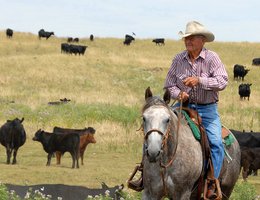
John Sibbitt on his cattle ranch in western Nebraska, 2007
Courtesy Moni Nation Hourt
Introduction
For nearly all of the state’s history the beef industry has formed a major portion of Nebraska’s economy, but that industry has not always looked like it does today. Over time, technological, logistical, and scientific innovations have changed the way that cattle are raised and slaughtered, and the ways that beef is packaged and transported.
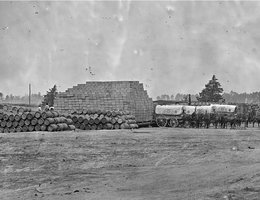
Disassembly plant where meat was packed into barrels. The government used the meat to feed the army.
Courtesy Library of Congress, 04102u
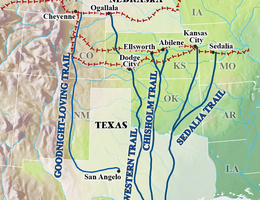
Some Texas Trails, Cow Towns, and Railheads
NET Learning Services
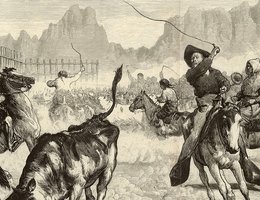
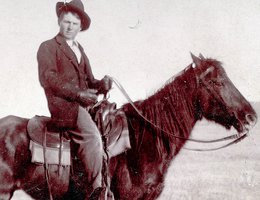
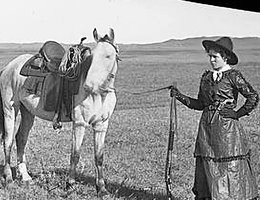
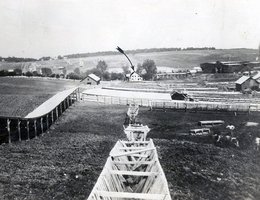
Original Omaha Stockyards, Frank Drexel Farm, 1885. Note: Arrow indicates first Livestock Exchange Building in the old Drexel farmhouse.
Courtesy History Nebraska, RG2608-1265
After the Civil War: Beef Comes to Nebraska
Cattle are so much a part of Nebraska life today that it is strange to think of a time when there were none. Cattle are not native to the American continents. The Spanish brought them to the Americas in the 16th Century.
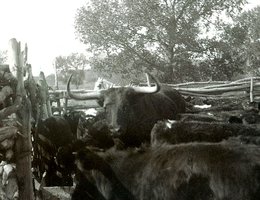
In Mexico, strays from Spanish herds, thrived and grew into large herds of wild animals that took care of themselves. Over almost 350 years, these animals evolved into the Texas Longhorns. The Longhorns had a high reproductive rate, were resistant to disease, and could fight off predators. Their numbers grew into the millions by the time Texas joined the Union in 1845. These animals became the foundation of the beef empires in the American West and dramatically changed what Americans ate.
Before the Civil War, when Americans ate meat, it was mostly poultry, pork, and game. Poultry (like chickens and ducks) and small game (like rabbits and squirrels) could be eaten the same day they were killed. Pork and large game (like deer) could be dried, smoked, or salted. But Americans never really liked dried beef, and fresh beef spoils quickly. After the Civil War, demand for beef exploded, both in America and in Europe. Railroads moved west connecting the huge herds of cattle with the packing plants, and refrigeration allowed beef to be processed year-round. When Nebraska became a state in 1867, it quickly led in beef production. Our western regions, particularly the Sandhills, were thick with healthy grasses for grazing, plenty of water, and rich farmlands that produced abundant corn for feeding.
During the Civil War, two changes created the American beef industry:
First, The Union army created a new demand for beef. To meet this demand, innovative butchers in Chicago with names like Gustavus Swift and P. D. Armour acquired large buildings, hired every butcher they could find, and created what they called "disassembly plants." A steer would enter the plant, be slaughtered, processed, and emerge at the end canned or packed in barrels. This meat was then sold to the government to feed the army.
The war also created a surplus of cattle in Texas. There, many of the men who worked the ranches went off to war. And by 1862, the Union had cut Texas off from the traditional markets for its cattle. But cattle on the Texas plains continued to breed and multiply. So at the end of the Civil War, there were cattle in the south and a demand for them in the north.
The creation of the Union Pacific and Southern Pacific Railroads solved the imbalance. Texans could drive their surplus cattle north to meet the railhead where they could be shipped to Chicago and the eager demand of the American people. By 1868, Texas herds were reaching railheads in Sidney, Ogallala, and North Platte. Soon ranches sprang up, and the Nebraska cattle empire was born.
In the 1870s, Americans’ taste for beef became more refined. The Texas Longhorn, the animal that could take care of itself, produced lean and tough meat. Americans wanted the more tender and flavorful meat produced by breeds like Hereford and Angus.
In response to this change in taste, ranchers began to "up breed" their herds. But cattle like Hereford and Angus needed more tending than Longhorns did. They needed hay supplied to them in winter. They needed easy access to water. They often needed help calving, and they needed protection from predators. And there were now thousands of them who needed this special care.
"Delicate Cattle" describes these new breeds in western Nebraska. Find out how they fared in the Blizzards of 1886 and 1887 that severely affected the beef industry. From the 2008 NET Television production Beef State.
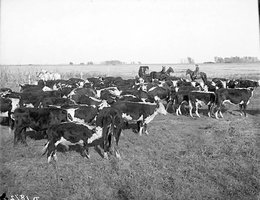
In the Spanish model adopted by Nebraskans, the "ranch" was simply a cluster of buildings. Cattle roamed freely on public land, taking care of themselves. Cattle were branded so that an individual could identify his animals. Periodically, the rancher would organize a roundup to gather his cattle together and “drive” them to market.
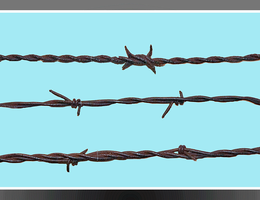
Many ranchers left as demands changed, but others learned how to provide more protection for these delicate new cattle. Barbed-wire fencing allowed ranchers to manage their grasslands and protect hay meadows. Windmills let them put the water where the cattle were, rather than taking the cattle to where the water was. Over time, the large free-range ranches became the privately-owned, fenced, and managed ranches we know today.
Ranchers noticed that it was a long way to take their cattle to Chicago for meat-processing. In 1882, Alexander Swan came to Omaha and urged business leaders there to consider creating a stockyard. He and others, including Englishman C. R. Schaller, argued that shipping cattle the extra 500 miles to Chicago caused weight loss, and therefore profit loss.
They also noted that Omaha was a transportation center, with the Union Pacific Railroad and the Missouri River. The Missouri provided an adequate water supply and excellent drainage, both necessary for raising stock. Swan noted, too, that there was plenty of corn and grass to fatten the cattle.
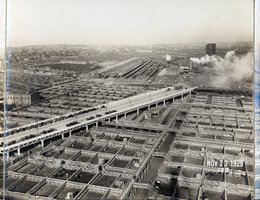
In 1884, a group of investors built cattle pens on 10 acres of ground. Then, just two years later, the investors built the Livestock Exchange building. As the stockyards grew quickly, so did the number of animals it processed. Soon meatpackers set up packing plants near the yards. By 1890, South Omaha was the center of an expanding western meat industry. The stockyards and packing plants became essential to the city of Omaha’s economy.
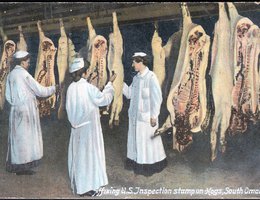
Affixing U. S. Inspection Stamp on Hogs, South Omaha, Neb., 1909
Courtesy History Nebraska, RG2608-1265
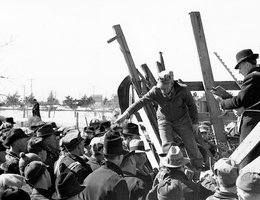
Auctioning Farm Equipment on the Zimmerman Farm near Hastings, Nebraska, March 1940
Courtesy History Nebraska, RG2608-1265
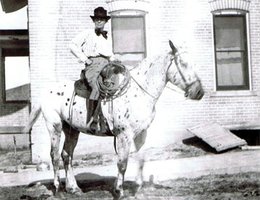
The 20th Century: Beef Production as a Science
Range management is the handling of grasslands where cattle graze in order to maintain and increase both plant and animal production. Proper range management is crucial to successful ranching, and so, it is not surprising that Nebraska is where it was born.
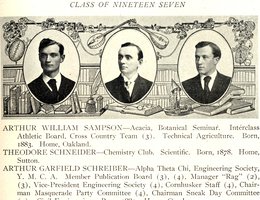
Arthur William Sampson, a student of Nebraska botanist, Charles Edwin Bessey, pioneered range management in Nebraska. Sampson’s career, was a combination of laboratory and applied science. He is credited with many firsts, including rotational grazing. This is a plan for moving livestock to different pastures to graze so the plants can continue to grow. Sampson was the first to develop a practical method for evaluating the quality of ranges. He also wrote the first range management textbook.
Shortly after the end of World War II, the Society of Range Management was founded, and in 1948 the Nebraska Section was organized. Along with the post World War II boom in cattle prices came a wider and wider interest in maintaining grasslands.
Technology and innovation dramatically changed beef in the first quarter of the 20th century. Improvements to railroad cars ended the days of shipping live cattle. Initially, railroads had been resistant to change because of their large investments in a system of corrals where they could feed and water cattle in transit to the Omaha or Wyoming stockyards.
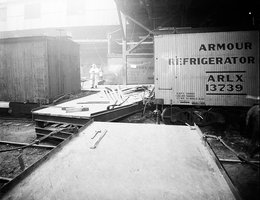
But live cattle took up a lot of space in a rail car, lost weight in transit, and occasionally injured each other. Moreover, when you ship a live animal, you ship extra weight in hooves, bone, and horn that will not be consumed. Shipping just the carcasses made economic sense. The addition of refrigeration to railroad cars made that possible.
Meat packing changed and grew as well. The 1906 publication of The Jungle, a novel by Upton Sinclair, aroused a public outcry against the packing industry, resulting in the decline of beef sales and exports.
In response, with support from the larger packing houses stung by market losses, the federal government passed the Meat Inspection Act of 1906 and the Pure Food and Drugs Act of 1906.These two pieces of legislation created a system for independent inspection of meat. From them came the Food and Drug Administration.
The four major packers, Armour, Cudahy, Morris, and Swift, continually expanded and improved their operations. In 1915, Armour built a new facility that was one of the largest in the region.
Find out more about how beef went "modern" in this period in the video, Mechanization on Ranches. From the 2008 NET Television production, Beef State.
By 1925, beef production had improved. Stockyards and packing houses began to follow health guidelines and had somewhat improved working conditions for their workers. Machines were changing agriculture all across Nebraska. Gasoline-powered engines caused some of the biggest changes. With a tractor, a farmer could raise and deliver more corn. This caused growth in feedlots around the state.
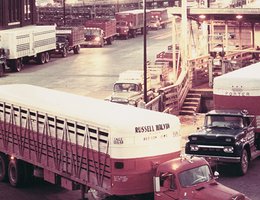
Cars, trucks, and light tractors, combined with a growing system of roads and highways, helped ranchers increase the amount of hay that they could produce. Trucks slowly began to compete with the railroads as the way to ship livestock to South Omaha. In South Omaha, the stockyards continued to grow, eventually covering over 200 acres.
In the very first issue of Nebraska Farmer, published in January 1877, there were two articles on the importance of breeding. Continuing to improve the genetics of the herds meant bringing better bulls. Those good bulls were both expensive and big and they had to be with a producers cows in order to mate with them. Some breeders co-owned the top bulls, but that meant trucking those prize bulls back and forth between herds.
The Nebraska Farmer January 1877 “Galloway Cattle” and “Laws of Breeding”
That problem found technological solutions. Beginning in the 1930s, American ranchers began using artificial insemination to improve their herd genetics. But it wasn’t until the early 1940s that refrigeration methods were discovered that allowed semen to be frozen, extended, and stored for use where and when breeders needed it. This technology meant that the fine bulls produced on Nebraska ranches could sire calves with cows in other states such as Montana and Texas and almost anywhere else on earth.
As early as 1933, rancher Essie Davis was one of those ranchers who began building better cattle bloodlines. In addition to improving bloodlines, Essie Davis advanced the cattle’s general wellbeing. She introduced a variety of grass types to improve the quality of the rangeland. She bragged that her pastures contained seventy varieties of grasses. In addition to the grasses, Essie and her son Thane, who became her ranching partner upon his graduation from the University, planted 250,000 trees. She called them "outdoor barns".
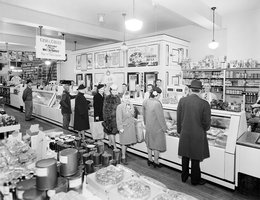
Customers shopping at the meat counter in Freadrich Bros. Cash & Carry Market, 1945
Courtesy History Nebraska, RG2608-1265
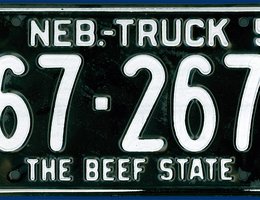
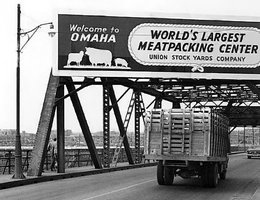
Welcome to Omaha sign: "World’s Largest Meatpacking Center", 1955
Courtesy History Nebraska, RG2608-1265
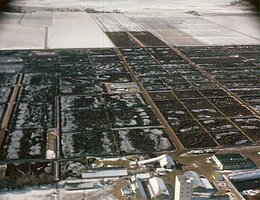
Mega Feed Lot in Nebraska
Courtesy Union Pacific Railroad’s film, Beef Rings the Bell
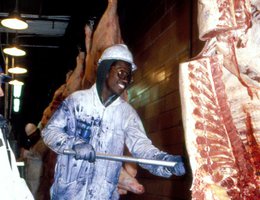
Modern packing houses used more humane methods to slaughter beef
Courtesy History Nebraska, RG2608-1265
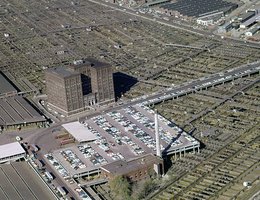
The Post-War Beef Boom
The demands of World War II led to huge advances in technology in the 1950s, even in the way Americans ate. Convenience foods became very popular with new methods to refrigerate, dry, and freeze foods.
New uses were found for equipment and chemicals that were used during the war. They increased the amount of food produced and made it easier to transport it. Some chemicals became fertilizers, herbicides, and insecticides. The antibiotics that were developed during the war were used in veterinary medicine for animals. The powerful diesel engines developed for military vehicles led to larger trucks and tractors. The combination of chemicals and more powerful equipment allowed farmers to work more cornfields, which then led to larger beef feeding operations. Diesel powered semi-trailer trucks allowed ranchers and feeders to ship their cattle on highways. With the completion of the interstate highway system and the addition of refrigeration, trucks replaced trains for the delivery of frozen beef.
With its entry into World War II, the United States faced a huge problem in assuring an adequate supply of food for its troops and its citizens. Beef was a critical element in the food supply chain. From the 2008 NET Television production, Beef State
All of these changes came at a price. The use of chemical fertilizers, herbicides, and pesticides and the growth of large feeding operations created serious environmental problems. Concerns grew that family farms and ranches were going to be pushed out of business by big corporations.
After World War II, South Omaha’s stockyards and packing houses were caught up in a postwar hunger for beef. In 1949, the average American consumed 144 pounds of meat per year, and in 1950, that number jumped to 160 pounds per year. That was nearly half a pound each day for every man, woman, and child. This was the beginning of the baby boom.
In 1956, Omaha beat Chicago as the largest meat-producing city in the world. It was also the year that the Interstate Highway System was born. More and more, cattle were brought to the yards by truck, gradually ending the industry’s dependence on rail transportation.
In 1961, a new operation, Iowa Beef Packers (soon known as IBP) opened. It was forty-five miles to the east and north of Omaha, in Denison, Iowa.
Traditional packing houses were multi-story buildings where livestock were driven up a long ramp to the top floor. They would also slaughter different species in the same building, which required different departments. Then they moved the carcass from the killing room to the chiller and into a railcar.
Iowa Beef Packers, as its name suggests, slaughtered only beef. Its building was all on the ground level and completely refrigerated. By refrigerating from the beginning, they were able to prevent shrinkage due to dehydration. They also created a true disassembly line where each person had one certain task in the butchering process.
IBP also changed the industry by developing boxed beef. Transporting carcasses to butchers required more time, space, and money. It meant that the slaughterhouse shipped a lot of waste material, and carcasses did not fit easily into the rectangular spaces of refrigerated trucks and rail cars. By cutting the carcasses into smaller pieces that fit nicely into boxes, they were able to pack much more beef into a truck. This greatly reduced the cost for transportation. Because they were doing more of the processing at their plant, the beef required less skilled labor at the meat counter.
By 1973, the busy stockyards and packing plants of twenty years earlier were almost gone. The way beef was fed, slaughtered, and sold had completely changed in just a quarter of a century.
It was the End of the Stockyards, but not the end of beef in Nebraska. From the 2008 NET Television program, Beef State


Specialty: "Blackwell Angus, Quality Beef". Array of beef at Sun Mart Grocery, Lincoln, NE, 2008
Courtesty NET Learning Services

Analysis of computerized images of inch-thick ribeye steak helps predict the pounds of retail beef a carcass will yield after boning and trimming
Courtesy USDA Agricultural Research Service, K8645-17

Researcher Chris Calkins inspecting a flat iron steak
Courtesy University of Nebraska Institute of Agriculture and Natural Resources

Researcher Chris Calkins grilling up a flat iron steak, 2008
Courtesy University of Nebraska Institute of Agriculture and Natural Resources
The 21st Century: Beef Production for a Global Market
As of 2006, Nebraska had the top three beef cattle counties in the U.S. January 2006 figures showed that Nebraska continued to have far more cattle than people. Cattle outnumbered Nebraskans nearly 4 to 1. There were 1.93 million cattle but just 1.7 million Nebraska residents. Those cattle plus the 4.7 million head that were sent here to be fed annually totaled nearly 6.64 million cattle.
The cattle industry continued to be Nebraska’s largest industry, with nearly $7 billion in sales. When you consider all of the other businesses that supported the cattle industry, that number jumped to just over $12 billion.
There were about 4,500 feeding operations in Nebraska in the early 2000s. While some lots were enormous, nearly 800 of them took care of more than 1,000 animals. That meant there were over 3,700 feedlots that each held less than 1000 animals at a time.
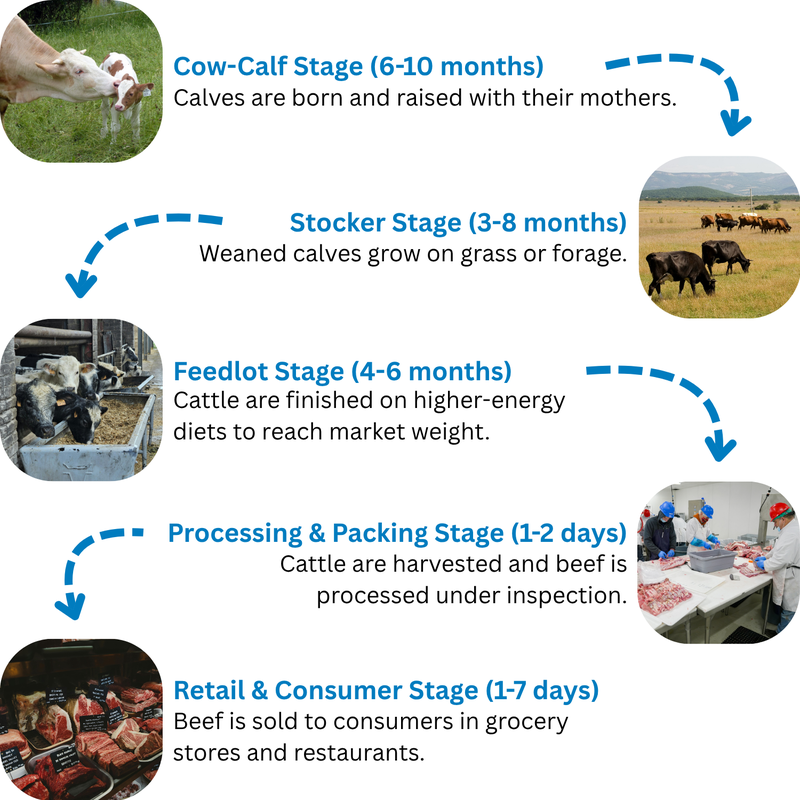
Producing beef takes longer than you might think. The production cycle, from the time a cattle breeder chooses his or her breeding stock to the delivery of beef to the consumer, spans nearly two years. Breeders, ranchers, feeders, processors, and distributors work within this cycle to keep grocery stores and restaurants well supplied to meet the needs of their customers.
Nebraska led the nation in beef exports, and world trade was growing, linking Nebraska to a much larger global economy. Issues related to the environment, use of drugs and chemicals, and other problems shaped not only public policy, but consumer demand. In meeting these challenges, new and expanding niche markets for cattle grew.
Most cattle in Nebraska belong to the Angus and Hereford breeds, but there are more than a dozen other breeds in our state. Some ranchers also raised their animals in special ways. A few ranchers raised cattle that were fed only on grass and never fattened with corn. Others raised animals without drugs or chemicals like antibiotics and hormones.
In the first few years of the 21st century, over 3,000 new products had been developed that made preparing beef easier and faster. Some beef products were already seasoned or marinated so there were many new flavor choices. Advances in freezing and transportation technologies allowed businesses to ship frozen meat anywhere in the world.
One important new idea came from researchers at the University of Nebraska. Dr. Chris Calkins, a meat scientist, and other researchers at the University of Nebraska and the University of Florida, were studying meats that were less popular. They were normally used for roasts or ground meat.
Dr. Calkins found a muscle in the front shoulder that his tests showed was quite tender. When Dr. Calkins cut that tender muscle from a piece of meat that would normally have been a roast, he found that he had invented a new steak: the flat iron steak. The flat iron steak quickly became popular because of its flavor, tenderness, and the way it easily took up marinades. The Nebraska “discovery” is now in many restaurants.
Updated Spetember 8, 2026
Glossary
disassembly plant—called a "processing plant" today, a factory-like building in which animal carcasses are butchered using assembly line principles
surplus—an amount more than or in excess of what is needed
stockyard—a large, enclosed space where livestock are held to be shipped, slaughtered, or sold
range management—the science of responsibly using and conserving lands used for grazing
artificial insemination—the use of artificial methods to introduce sperm into the uterine cavity for the purpose of breeding
flat iron steak—a tender cut of steak from the shoulder of a cow
Reflection Questions
- CAUSATION: How has the science of beef production responded to changes in consumer demand?
- SIGNIFICANCE: Think about one of the changes to beef production discussed in the article. How does it affect the food you have access to today?